
Running a small business is always a balancing act. You want to offer unique products while keeping prices competitive. In Chinese manufacturing, where many products are made through fully automated production, larger order quantities often mean lower costs, creating challenges for small businesses with limited budgets.
What is MOQ?
MOQ, or Minimum Order Quantity, is the smallest number of units a manufacturer is willing to produce and sell at one time. For factories, this ensures production costs are covered, but for small businesses, high MOQs can mean overstocking or dropping product lines entirely.
As the global economy slows, more clients have approached me for help with high MOQs. One client, who once purchased products by the container, found their demand reduced after COVID. Products they previously ordered in the thousands now needed to be bought in the hundreds—sometimes even below the factory’s established MOQ. This left them with a dilemma: cut the product line or find a solution.
Step 1: Understanding the Problem
The client turned to me for help in lowering the factory’s MOQ. Lowering MOQ isn’t always straightforward; to negotiate effectively, it’s crucial to understand why the factory sets MOQ rules in the first place. In this case, after discussions with the factory, it became clear that the products the client was purchasing were machine-made. Each production run required the machine to produce a minimum of 30,000 pieces. However, the client’s demand was only 3,000 pieces per quarter.
Step 2: Developing a Solution
After understanding the factory’s constraints and engaging in discussions, we devised a temporary solution. The factory agreed to combine our orders with those of other buyers, producing them together in one batch. While this solution worked in some instances, it wasn’t perfect—we often had to wait for the factory to coordinate other orders, and it wasn’t always feasible.
Step 3: Leveraging Relationships and Finding Alternatives
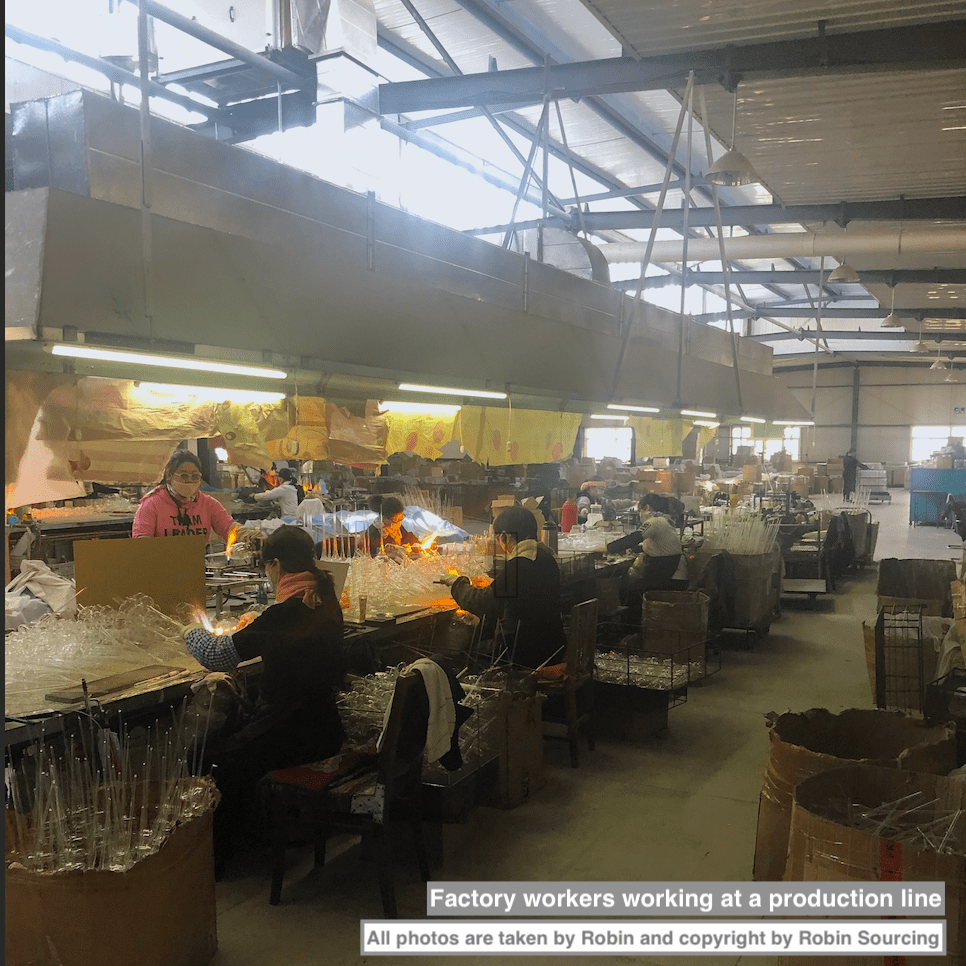
In China, one key to successful business dealings is “guanxi”—relationships and trust. Unlike in Western countries, building personal connections with suppliers is crucial. Thankfully, I have a trustworthy and extensive supplier network in China. Through my network, I found a smaller manufacturer for the client. This factory used semi-automatic production, which required a lower MOQ of 10,000 pieces. Moreover, the smaller factory was eager to grow and willing to collaborate. They agreed to produce the client’s order of 3,000 pieces per quarter by manufacturing all 10,000 pieces at once and storing the remaining 7,000 pieces for future orders. In addition, this supplier is well-connected with other factories in the area and can quickly source in-stock products when production is not feasible.
Results
Thanks to the smaller factory’s support and flexibility, as well as the coordination strategy with the original factory, the client was able to:
- Retain Their Product Line: The client maintained their product line and preserved the customer reviews and sales they had built over the years.
- Achieve Competitive Pricing: By leveraging the smaller factory’s flexibility and semi-automatic production, the client kept their costs competitive.
- Support Small Businesses: In collaborating with the smaller manufacturer, we not only solved the client’s problem but also supported the growth of a small business.
Key Takeaways
Many businesses aim to work with large, professional factories. However, big factories are not always the right fit for smaller clients. Large manufacturers often cater to major retailers like Walmart and Target, leaving smaller businesses with fewer options. On the other hand, smaller factories typically offer lower MOQs and have greater motivation to collaborate with small businesses. As long as the factory is legitimate and professional, why not give them a chance?
This case demonstrates that lowering MOQ is possible, but it requires understanding the factory’s perspective, negotiating strategically, and sometimes thinking outside the box. Each situation is unique, and finding the right solution depends on the specific circumstances. For more tips, check out my blog on “How to Negotiate to Lower MOQ.”
 Robin Sourcing | Reliable Sourcing, Better Business